Introduction
Large-span buildings demand strength, openness, and efficiency at the same time, and the Truss plays a decisive role in achieving this balance. Space Truss systems have become a core structural solution for stadiums, airports, exhibition halls, and industrial roofs, where long spans and heavy loads must be handled with precision. Unlike planar structures, a space Truss works in three dimensions, allowing forces to flow more evenly and predictably. In this guide, you will learn how Space Truss systems are designed, how their components interact, and why detailed system understanding is essential for reliable structural performance.
Structural Fundamentals of a Space Truss System
Three-Dimensional Load Transfer Mechanism in Truss Structures
A space Truss transfers loads through a three-dimensional network of interconnected members. Loads move from the roof surface into nodes, then spread through multiple paths before reaching supports. This shared load path reduces stress concentration and improves overall stability. Unlike flat systems, it resists forces from different directions at the same time. Wind, seismic action, and uneven live loads are handled efficiently. Engineers value this mechanism because it provides predictable force flow and high redundancy. If one path carries less load, others compensate naturally, improving system reliability.
Axial Force Behavior Compared to Conventional Planar Truss Systems
In a space Truss, most members work in axial tension or compression. Bending moments remain minimal because geometry directs forces along member axes. This behavior differs from planar Truss systems, which often experience out-of-plane bending. Axial force usage improves material efficiency and allows lighter sections to carry large loads. It also simplifies structural analysis and fabrication control. When members mainly carry axial forces, steel strength is used more fully. This explains why space Truss structures span large distances using less material than traditional frames.
How Triangulation Ensures Stability in Space Truss Design
In space Truss systems, triangulation is not a visual preference but a structural necessity. By repeating stable triangular units in three dimensions, engineers create predictable stiffness, clear load paths, and reliable performance under both static and dynamic actions.
| Dimension | Role of Triangulation in Space Truss | Typical Technical Indicators / Data | Units / Reference Range | Engineering & Design Notes |
| Geometric principle | Ensures geometric invariability | Degrees of freedom = 0 (ideal) | – | Triangles are the smallest stable structural unit |
| Source of stiffness | 3D triangulated units form a rigid spatial body | Overall stiffness increase 30–60 | % | Compared with planar Truss systems |
| Typical unit types | Tetrahedral or pyramidal units | Members per unit 6–8 | pcs | Common in double-layer space Truss systems |
| Member force behavior | Predominantly axial force | Axial force ratio >90 | % | Minimizes bending and material waste |
| Deformation control | Limits global deflection and torsion | Deflection ratio L/250–L/400 | – | Typical for large-span public buildings |
| Lateral performance | Provides uniform stiffness in all directions | Directional stiffness variation <10 | % | Reduces sensitivity to wind direction |
| Dynamic behavior | Improves vibration stability | Fundamental period 1.5–3.0 | s | Typical range for airport and terminal roofs |
| Seismic mechanism | Multiple load paths and redundancy | Load paths ≥3 | paths | Local failure does not cause collapse |
| Support dependency | Reduces need for additional bracing | Secondary steel reduction 15–25 | % | Improves space efficiency |
| Structural analysis | Simplifies force prediction | Linear elastic analysis applicable | – | Facilitates FEM modeling and verification |
| Geometric adaptability | Fits flat and free-form surfaces | Node angles 30–75 | ° | Suitable for complex architectural forms |
| Construction stability | Self-stable during erection stages | Temporary supports reduced | – | Enhances construction safety and speed |
Tip:For large-span space Truss roofs, using fully triangulated three-dimensional units early in the design phase helps control deformation, simplifies structural analysis, and reduces reliance on secondary bracing and corrective measures later.
Core Components and System Details of Space Truss Structures
Truss Members: Tubular Elements and Axial Load Performance
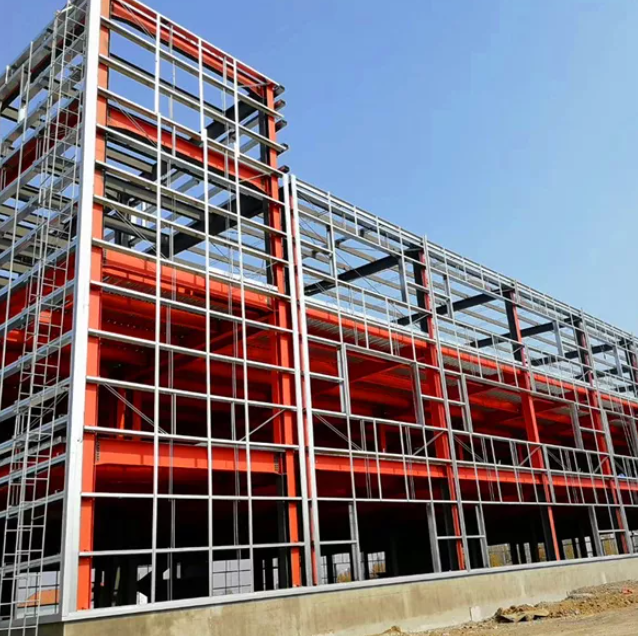
Members are the primary load-carrying elements in a space Truss. They are usually steel tubes designed for axial tension or compression. Tubular sections provide uniform strength and resist buckling effectively. Their closed shape improves torsional performance and durability. Member length and diameter depend on span, load, and system depth. Proper sizing ensures efficient force transfer without excessive material use. Because members are prefabricated, accuracy in cutting and forming directly affects system performance. High-quality fabrication reduces installation adjustments on site.
Nodes and Joints: Ball Nodes, Welded Nodes, and Force Distribution
Nodes connect multiple members and control how forces flow through the space Truss. Ball nodes allow members to meet at precise angles, enabling uniform load distribution. Welded nodes offer high stiffness and are often used in heavy-duty applications. Each node must handle combined axial forces from several directions. Poor node design can weaken the entire system. Engineers focus on node geometry, material strength, and connection method to ensure safety. Because nodes concentrate forces, quality control during manufacturing is critical.
Layer Configuration: Single-Layer and Double-Layer Truss Systems
Layer configuration affects stiffness and span capacity in a space Truss. Single-layer systems suit lighter loads and smaller spans. Double-layer systems provide higher rigidity and are common in large roofs. The distance between layers creates structural depth, improving bending resistance. Web members connect the layers and complete the load path. Designers select layer type based on span length, load demand, and architectural needs. Double-layer Truss systems often allow longer spans without intermediate supports.
Space Truss Geometry and Structural Arrangement Types
Triangular Pyramid and Tetrahedral Truss Unit Systems
Triangular pyramid and tetrahedral units are widely used in space Truss design. They provide uniform stiffness and stable geometry. Each unit distributes load evenly across connected members. This makes them suitable for heavy loads and long spans. Engineers prefer these units for industrial roofs and stadiums. Their repetitive geometry simplifies analysis and fabrication. Assembly is faster because each unit follows the same dimensional logic. This consistency improves construction efficiency and structural predictability.
Quadrangular Grid and Double-Layer Space Truss Configurations
Quadrangular grid systems use square-based units combined into double-layer Truss structures. They balance material use and structural depth effectively. Adjusting grid spacing allows designers to control stiffness and deflection. These systems are common in airports and exhibition halls. They offer flexible layout options and smooth load transfer. Engineers often optimize grid geometry using digital models to reduce steel consumption while maintaining strength. Quadrangular grids also integrate well with roofing and cladding systems.
Flat, Curved, and Dome-Based Space Truss Structures
Space Truss systems adapt easily to flat, curved, or dome shapes. Flat systems suit industrial and commercial buildings. Curved and dome systems improve aerodynamic performance and architectural impact. Dome Truss structures distribute loads radially, reducing peak stresses. This geometry works well for large-span enclosures. Curved forms also enhance wind resistance. Designers choose shape based on function, aesthetics, and environmental conditions. The flexibility of Truss geometry supports creative architectural expression.
Load Distribution and Structural Performance Advantages of Space Truss
Multi-Directional Load Sharing in Space Truss Systems
A space Truss shares loads across many members simultaneously. This reduces stress on individual components. Loads from wind, snow, and equipment spread through the spatial grid. Such distribution limits local overstress and improves durability. It also increases tolerance to uneven loading. Engineers value this behavior because it enhances safety margins. When loads change direction, the system adapts naturally without sudden force concentration.
Seismic and Wind Resistance Enabled by 3D Truss Behavior
Three-dimensional action gives space Truss systems strong seismic and wind resistance. Axial force paths allow energy dissipation through controlled deformation. The structure responds as a whole rather than as isolated elements. This reduces damage risk during earthquakes. Wind loads also distribute evenly across the grid. Many large public buildings use Truss systems for this reason. Their performance under dynamic loading makes them reliable in challenging environments.
Strength-to-Weight Optimization in Large-Span Truss Structures
Space Truss structures achieve high strength with relatively low weight. Axial force behavior and triangulation reduce material demand. This lowers foundation loads and construction costs. Lightweight systems also simplify transportation and erection. Engineers optimize member size and spacing to reach the best balance. The result is a structure that spans large distances efficiently. Strength-to-weight optimization explains the widespread use of Truss systems in modern architecture.
Design, Fabrication, and Installation Workflow of Space Truss Systems
Space Truss Structural Design and System Coordination
Effective space Truss design relies on early system-level coordination rather than isolated member sizing. Engineers establish load combinations, serviceability limits, and structural depth together, ensuring the Truss geometry supports both strength and architectural intent. Digital structural models allow rapid evaluation of load paths, stiffness, and vibration behavior. Close coordination with architectural and mechanical layouts ensures node locations accommodate roof openings, equipment zones, and service routes, reducing conflicts and improving overall material efficiency.
Prefabrication Precision and Truss Component Manufacturing
High-quality space Truss systems depend on factory-controlled manufacturing processes. Advanced cutting, forming, and welding techniques maintain tight tolerances across large numbers of components. Consistent fabrication ensures uniform force transfer between members and nodes, reducing unintended stresses. Standardized components also support modular assembly and quality traceability. By shifting complexity from site to factory, prefabrication improves repeatability, shortens schedules, and enhances the long-term structural performance of the Truss system.
On-Site Assembly Logic and Truss System Installation Control
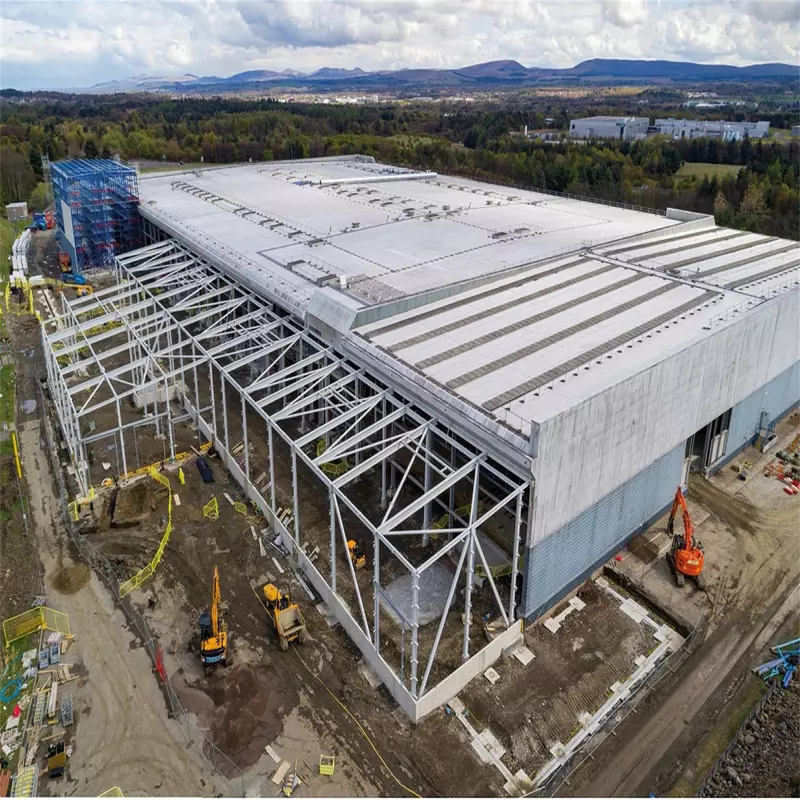
Successful installation of a space Truss requires a defined erection strategy that considers structural stability at each stage. Assembly sequences are planned to limit temporary deformation and uneven load introduction. Survey control and real-time alignment checks maintain geometric accuracy as the structure grows. Gradual load transfer from temporary supports to permanent connections prevents stress concentration. Controlled installation ensures the completed Truss achieves its intended stiffness, durability, and service performance.
Typical Applications Driven by Space Truss System Details
Large-Span Roof Truss Systems for Stadiums and Exhibition Halls
Large-span roof Truss systems for stadiums and exhibition halls are designed to balance structural efficiency, user experience, and architectural expression. Engineers optimize Truss depth and grid spacing to control deflection under crowd, lighting, and suspended media loads. The three-dimensional layout improves vibration performance, which is critical for events with dynamic movement. Space Truss roofs also simplify the integration of lighting rigs, scoreboards, and acoustic elements. By reducing internal supports, these systems enhance sightlines, improve space utilization, and support adaptable venue layouts over the building’s service life.
Space Truss Applications in Airports and Transportation Buildings
Airports and transportation hubs demand structural systems that handle long spans, heavy public use, and complex building services. Space Truss systems meet these needs through modular geometry, predictable load paths, and efficient integration with architectural and MEP requirements, making them a proven choice for large terminals and transit facilities.
| Aspect | Application in Airports & Transportation Buildings | Typical Technical Indicators | Units / Standards | Engineering Notes |
| Structural role | Roof system for terminals, concourses, canopies | Clear span 40–80 | m | Widely documented in airport terminal roofs worldwide |
| Span capability | Column-free circulation halls | Span-to-depth ratio 15:1–25:1 | – | Ensures openness without excessive structural depth |
| Structural type | Double-layer space Truss (flat or curved) | Structural depth 2.5–5.0 | m | Double-layer grids improve stiffness and vibration control |
| Load types supported | Dead, live, wind, service loads | Roof live load 0.5–1.0 | kN/m² | Typical for large public buildings (varies by code) |
| Wind performance | Resistance to uplift and lateral loads | Design wind speed 30–45 | m/s | Based on international airport design practices |
| Seismic behavior | 3D load redistribution | Fundamental period 1.5–3.0 | s | Depends on span and support configuration |
| Material selection | Tubular steel members | Steel grade S355 / Q355 | MPa | Common structural steel for long-span Truss systems |
| Node system | Bolted ball nodes or welded hollow nodes | Node tolerance ±1.0 | mm | Tight tolerances required for accurate assembly |
| Service integration | HVAC, lighting, smoke exhaust | Service zone depth 0.8–1.5 | m | Space between layers used for MEP routing |
| Fire design | Structural fire resistance | Fire rating 1.0–2.0 | h | Achieved via coatings or protected sections |
| Durability | High public-use resistance | Design life ≥50 | years | Standard for major transport infrastructure |
| Construction method | Prefabrication + on-site assembly | Installation rate 300–600 | m²/day | Dependent on crane capacity and module size |
| Maintenance access | Integrated walkways and nodes | Inspection interval 1–2 | years | Required by airport operation standards |
Tip:For airport projects, early coordination between Truss geometry and MEP routing is critical. Using the inter-layer space for services can reduce secondary steel, lower ceiling depth, and simplify long-term maintenance access without compromising structural performance.
Industrial and Heavy-Load Space Truss Structure Systems
Industrial and heavy-load space Truss structure systems are engineered for environments where loads remain high and continuous over long periods. In workshops, power plants, and processing facilities, these systems carry crane loads, suspended equipment, and dense service networks without excessive deflection. Designers typically increase Truss depth, member diameter, and node capacity to control stress and fatigue. The three-dimensional force distribution limits localized overstress at supports, allowing foundations to be optimized. This structural behavior improves long-term reliability, reduces maintenance demands, and ensures stable operation under repetitive industrial loading conditions.
Conclusion
This guide explains how Space Truss systems achieve strength, stability, and efficiency through three-dimensional load paths, triangulated geometry, and integrated components. By understanding system details, engineers can deliver reliable large-span structures with predictable performance. Qingdao qianchengxin Construction Technology Co., Ltd. provides Space Truss solutions that combine precise design, prefabrication, and installation services, helping projects achieve durability, cost efficiency, and long-term structural value.
FAQ
Q: What defines a Space Truss system?
A: A Space Truss uses three-dimensional triangulation to distribute loads efficiently across members and nodes.
Q: How does a Truss improve large-span roof design?
A: A Space Truss enables long spans with minimal supports while controlling deflection and structural weight.
Q: Why is triangulation critical in Truss structures?
A: Triangulation allows each Truss member to work mainly in axial force, improving stability and predictability.
Q: How are Space Truss systems manufactured and installed?
A: Each Truss is prefabricated with precision, then assembled on-site following controlled erection sequences.
Q: Are Truss systems suitable for heavy industrial loads?
A: Yes, Space Truss systems handle continuous heavy loads through optimized geometry and robust node design.


