Introduction
Modern construction projects face growing pressure to deliver strength, speed, and architectural flexibility at the same time. Traditional systems often fall short when spans increase and timelines tighten. As a result, Steel Structures, especially space frame systems, have become a preferred solution for airports, stadiums, industrial facilities, and large commercial buildings. Their three-dimensional geometry and efficient material use solve many long-standing structural challenges. In this article, you will explore seven key benefits of using space frame steel structures and understand why they play a critical role in modern construction.
Superior Load Distribution and Structural Strength of Steel Structures
Three-Dimensional Load Transfer in Space Frame Steel Structures
Space frame steel structures rely on a three-dimensional network of interconnected members. Unlike planar systems that carry loads along limited paths, this geometry allows forces to spread evenly in all directions. As a result, steel structures work as a unified whole rather than isolated elements. It improves overall stability and reduces peak stress in individual members. For large roofs and wide-span buildings, this balanced load transfer leads to safer and more predictable structural behavior throughout the building lifecycle.
Enhanced Stability of Steel Structures Under Extreme Conditions
In environments exposed to earthquakes, strong winds, or heavy snow, the stability of space frame steel structures is not based on assumptions. It is supported by well-established structural mechanics, design codes, and real engineering practice. The following table breaks down how these systems perform under different extreme conditions, with clear applications, technical indicators, and practical design considerations.
| Extreme Condition | Typical Applications | Structural Response of Space Frame Steel Structures | Key Technical Indicators (Engineering Reference Ranges) | Design & Engineering Considerations |
| Strong wind loads (typhoons, gusts) | Airport terminals, exhibition halls, coastal public buildings | Three-dimensional load paths distribute wind forces across multiple members, reducing local overstress | Basic wind pressure: 0.5–1.0 kN/m² (coastal zones up to 1.2 kN/m²)
Roof deflection limit: L/250–L/300 | Node stiffness must match axial forces; roof cladding must be designed for uplift and suction |
| Seismic actions (moderate to high seismic zones) | Stadiums, transport hubs, industrial plants | Highly redundant system allows alternative load paths after local yielding, improving collapse resistance | Seismic intensity design: Zone 7–9
Fundamental period (large-span roofs): 0.5–1.5 s | Prioritize ductile node design; avoid abrupt stiffness changes; supports must allow horizontal displacement |
| Heavy snow loads | Northern exhibition centers, logistics warehouses, sports roofs | Uniform grid distributes surface loads evenly, reducing risk of localized buckling | Design snow load: 0.3–0.8 kN/m² (heavy snow regions may exceed 1.0 kN/m²)
Compression ratio of members ≤ 0.9 | Roof slope and drainage must prevent snow accumulation; asymmetric snow load cases must be checked |
| Temperature variation (daily and seasonal) | Large steel roofs, semi-open public structures | Multiple nodes allow coordinated deformation, reducing thermal stress concentration | Thermal expansion coefficient (steel): 1.2×10⁻⁵ /°C
Typical design temperature range: ±30–40°C | Sliding bearings or release nodes recommended; avoid over-constraining the structure |
| Local abnormal loads (equipment, maintenance loads) | Exhibition halls, industrial facilities | Concentrated loads are dispersed through spatial members, limiting local overstress | Typical concentrated loads: 5–20 kN (equipment zones)
Local member stress checked under combined load cases | Equipment load paths should be planned early; lower chord and node capacity must be verified |
| Long-term service and fatigue | High-traffic public buildings | Lower stress amplitude and load sharing reduce cumulative fatigue damage | Fatigue stress range ≤ 0.6 × yield strength (fy) | Welded and bolted joints should meet fatigue class requirements; regular inspection planning advised |
Tip:For projects in high-wind or high-seismic regions, the true advantage of space frame steel structures lies in load redistribution rather than sheer stiffness. Early coordination of node detailing, support conditions, and overall structural continuity often delivers greater safety gains than simply increasing member sizes.
Reduced Stress Concentration for Safer Steel Structures
Traditional beam-column systems often create stress concentration at joints. Space frame steel structures minimize this issue through multiple load paths. Each connection shares responsibility instead of acting as a single critical point. This design improves fatigue resistance and extends structural lifespan. Over time, reduced stress concentration leads to fewer maintenance needs and better overall structural reliability.
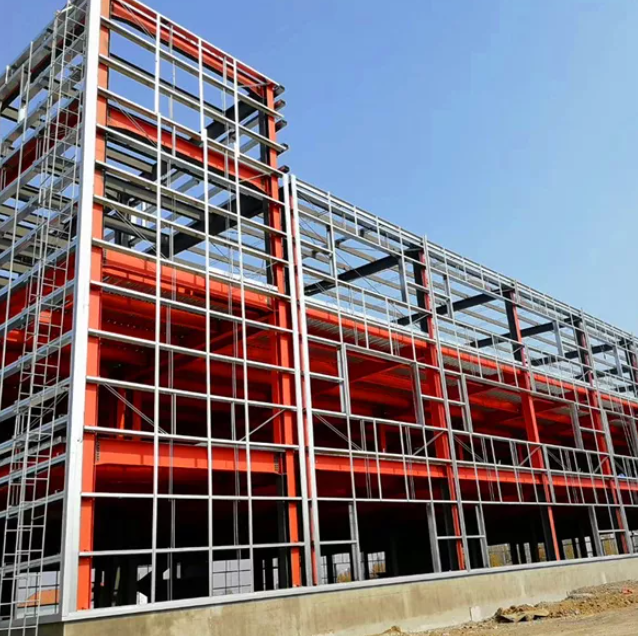
Lightweight Yet High-Strength Advantages of Space Frame Steel Structures
High Strength-to-Weight Ratio of Steel Structures
The high strength-to-weight ratio of steel is amplified in space frame systems through geometric efficiency rather than material mass. Members are arranged to work primarily in axial tension or compression, which allows steel to perform near its optimal capacity. This structural principle reduces bending moments and limits deflection in long-span roofs. Lower self-weight also improves dynamic behavior by reducing inertia forces under wind or seismic action. As a result, large-span buildings achieve structural efficiency while maintaining strict safety and serviceability limits.
Lower Foundation Loads Enabled by Steel Structures
The reduced self-weight of space frame steel structures directly lowers the vertical and lateral forces transferred to foundations. This enables smaller footing sizes and, in many cases, shallower foundation systems. In soft soil or seismic regions, lower foundation loads reduce settlement risk and improve overall stability. From a construction perspective, simpler foundations shorten excavation time and reduce concrete and reinforcement demand. These advantages improve constructability and allow projects to progress faster with fewer geotechnical constraints.
Material Efficiency Compared to Traditional Steel Structures
Space frame systems achieve material efficiency by distributing forces through multiple interconnected members instead of relying on oversized primary beams. This allows steel sections to be optimized for axial forces rather than bending, where material demand is higher. Uniform member sizing also simplifies fabrication and reduces waste during production. Compared to traditional steel structures, space frames often deliver equivalent spans with lower total steel tonnage, improving cost efficiency while maintaining structural reliability and predictable performance.
Architectural Freedom Enabled by Space Frame Steel Structures
Creating Complex and Iconic Forms with Steel Structures
Space frame steel structures enable complex architectural forms by translating curved or free-form surfaces into modular, repeatable units. This geometric subdivision allows engineers to control force flow while maintaining architectural intent. Structural analysis tools optimize member length and node geometry to manage stress distribution across irregular shapes. As a result, domes, gridshells, and sculptural roofs achieve both visual impact and predictable performance. This approach allows iconic buildings to balance artistic expression with structural efficiency and constructability.
Large Column-Free Spaces Using Steel Structures
Space frame systems transfer loads efficiently to perimeter or core supports, eliminating the need for interior load-bearing columns. This creates uninterrupted interior spaces that support flexible circulation, equipment placement, and crowd movement. From an engineering perspective, uniform load sharing reduces peak stresses and deflection across long spans. For building operators, column-free layouts simplify future reconfiguration and improve functional efficiency, especially in transportation hubs, exhibition halls, and sports facilities.
Integration of Structure and Aesthetics in Steel Structures
In space frame steel structures, structural clarity and visual expression often align. Exposed members and nodes reveal load paths and construction logic, reinforcing architectural authenticity. Precise fabrication tolerances allow clean connections and consistent geometry, which enhances visual order. By reducing reliance on secondary finishes, designers lower material use and simplify detailing. This integration supports durable aesthetics that remain relevant over time while maintaining full structural transparency and performance.
Faster Construction Through Prefabricated Steel Structures
Off-Site Fabrication Benefits of Steel Structures
Off-site fabrication allows space frame steel structures to be produced under controlled conditions, where temperature, tolerances, and quality checks are tightly managed. Precision cutting, welding, and drilling improve dimensional accuracy and reduce cumulative errors during assembly. This approach also enables standardized testing of connections before delivery. By shifting complex work to the factory, on-site activities become simpler and safer. Parallel progress between fabrication and site preparation shortens critical paths and improves overall project coordination.
Rapid On-Site Assembly of Space Frame Steel Structures
Space frame steel structures are designed for efficient on-site assembly using bolted or modular node connections. Large sections can be preassembled and lifted into place, reducing installation time at height. This method improves safety performance and lowers dependency on highly specialized on-site labor. Consistent connection geometry accelerates alignment and reduces rework. Faster assembly also limits site congestion, which is especially important for urban projects or facilities that must remain partially operational during construction.
Construction Schedule Optimization with Steel Structures
Construction schedules benefit from the predictability of prefabricated space frame steel structures. Reduced exposure to weather-sensitive tasks lowers the risk of delays. Clear sequencing between delivery, lifting, and connection simplifies coordination among trades. Shorter on-site durations also improve cash flow management and reduce indirect costs. For large commercial or infrastructure projects, this level of schedule control supports earlier commissioning and improves overall project certainty without compromising structural quality.
Long-Term Cost Efficiency of Space Frame Steel Structures
Reduced Maintenance Costs of Steel Structures
Space frame steel structures are designed to minimize long-term maintenance through material choice and protective systems. Modern corrosion protection methods, such as hot-dip galvanizing and high-performance coating systems, significantly slow material degradation in both indoor and exposed environments. Because loads are evenly distributed, individual members experience lower stress ranges, which reduces fatigue-related deterioration. Inspection cycles are typically longer and more predictable than for concrete or timber systems. Over time, these factors lower repair frequency, reduce downtime, and stabilize operating budgets for facility owners.
Optimized Material and Labor Costs Using Steel Structures
Cost efficiency in space frame steel structures comes from structural logic rather than cost-cutting. The three-dimensional arrangement allows members to work mainly in axial force, reducing unnecessary material thickness. Prefabrication further improves efficiency by shortening on-site labor time and lowering installation complexity. Standardized components simplify logistics and reduce skilled labor dependency during assembly. Together, these factors help control material consumption and workforce requirements while maintaining structural performance, making cost planning more reliable for large and technically complex construction projects.
Lifecycle Value Maximization with Steel Structures
Lifecycle value depends on how long a building remains useful with minimal intervention. Space frame steel structures support this goal through durability, adaptability, and predictable performance. Their resistance to long-term deformation and compatibility with future upgrades allow buildings to evolve without major reconstruction. Structural redundancy also enhances safety margins over time. From an investment perspective, this stability reduces capital reinvestment pressure and extends functional service life, positioning steel structures as assets that deliver sustained value rather than short-term cost advantages.
Energy Efficiency and Environmental Performance of Steel Structures
Natural Lighting Optimization with Space Frame Steel Structures
Space frame steel structures allow roof systems to incorporate large skylight modules and glazed panels without disrupting structural continuity. Their evenly distributed load paths support higher glazing ratios while maintaining roof stiffness and deflection control. This enables daylight to penetrate deeper into large interiors, reducing lighting energy demand during peak occupancy hours. Studies in building physics show that improved daylight availability supports visual comfort and circadian alignment, which can enhance occupant well-being and productivity. From a design standpoint, controlled daylight integration also reduces heat gain concentration compared to isolated openings.
Ventilation and Climate Performance of Steel Structures
The three-dimensional openness of space frame steel structures supports both cross-ventilation and stack-driven airflow strategies. Large clear spans allow air to move freely without obstruction, improving air exchange efficiency. Roof-level vents and high-volume spaces enable warm air to rise and exit naturally, reducing internal heat buildup. When combined with operable façade systems, these structures help stabilize indoor temperatures and reduce reliance on mechanical cooling. This approach supports thermal comfort standards while lowering long-term energy consumption in large public and industrial buildings.
Sustainable Building Value of Steel Structures
Steel structures provide measurable sustainability benefits through material efficiency, reuse potential, and long service life. Space frame systems use steel primarily in axial loading, maximizing structural performance per unit mass and reducing overall material demand. At end of use, steel components can be dismantled and recycled with minimal quality loss, supporting circular construction models. Long-lasting protective systems extend service life and reduce replacement cycles. Together, these factors lower embodied carbon over the building lifecycle and support compliance with modern green building frameworks.
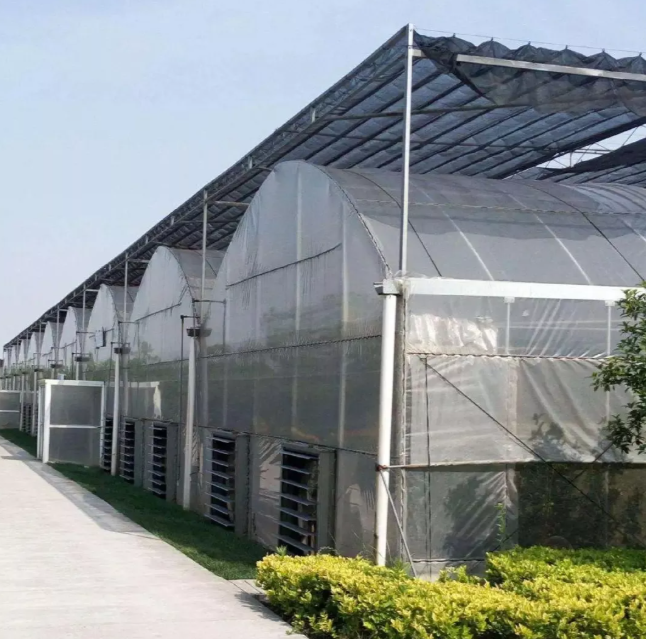
Adaptability and Future-Proofing of Steel Structures
Flexible Interior Reconfiguration Using Steel Structures
One of the strongest long-term advantages of space frame steel structures is their ability to keep the load-bearing system independent from interior layouts. This structural logic allows buildings to change function, layout, and equipment with limited intervention, while maintaining safety, efficiency, and asset value.
| Reconfiguration Aspect | Typical Applications | How Space Frame Steel Structures Enable Flexibility | Key Technical Indicators (Industry-Standard Ranges) | Design & Planning Considerations |
| Column-free structural spans | Exhibition halls, airports, shopping malls | Primary loads are carried by roof-level space frames, eliminating interior load-bearing columns | Typical clear span: 30–80 m (can exceed 100 m with optimized design)
Column spacing: ≥ 12–18 m | Early span planning is critical; service routing must consider large unobstructed zones |
| Non-load-bearing partitions | Offices, convention centers, commercial interiors | Interior walls act only as enclosures and can be removed or relocated without structural checks | Partition load allowance: 0.5–1.0 kN/m² (lightweight systems)
Floor live load unaffected | Use demountable partition systems; avoid fixing partitions to primary steel members |
| Floor load adaptability | Mixed-use buildings, industrial-to-commercial conversions | Space frame systems transfer loads to perimeter or core supports, allowing flexible floor usage | Typical design live loads:
Offices: 2.0–3.0 kN/m²
Retail: 4.0–5.0 kN/m² | Future load upgrades should be considered at design stage; reserve capacity improves adaptability |
| Integration of new MEP systems | Renovated terminals, upgraded venues | Large structural depth zones allow rerouting ducts, cables, and pipes without cutting structure | Typical service zone depth: 800–1500 mm
Allowable opening sizes defined by node spacing | Coordinate MEP early; avoid drilling through primary members or critical nodes |
| Change of building function | Stadiums to event halls, factories to exhibition spaces | Structural redundancy allows functional change without reinforcing the main frame | Structural utilization ratio often < 0.8 under original design loads | Functional conversion should still trigger load re-evaluation; fire and egress codes may change |
| Construction intervention scope | Operational buildings, phased renovations | Reconfiguration occurs mainly at interior level, minimizing downtime and structural work | Structural modification rate: typically < 10% of total steel tonnage | Plan phased construction to maintain operations; protect exposed steel during renovation |
Tip:When long-term adaptability is a project goal, designers should define future load envelopes and service zones early. Reserving modest structural capacity and keeping interior elements independent from primary steel members often delivers the highest return over the building’s lifecycle.
Multi-Use Potential of Space Frame Steel Structures
Space frame steel structures are well suited for buildings expected to serve multiple functions over their lifespan. Their large clear spans and high load-sharing capacity allow spaces to shift between sports, exhibitions, retail, or light industrial use without altering the primary structure. Design standards typically account for higher live-load envelopes, making future upgrades feasible within existing safety margins. In addition, standardized connections and modular components simplify partial dismantling or expansion. This approach supports adaptive reuse strategies, lowers embodied carbon by avoiding demolition, and aligns with modern urban regeneration principles.
Long-Term Relevance of Steel Structures in Urban Development
Urban development increasingly favors buildings that remain useful despite changing economic and social needs. Space frame steel structures offer long-term relevance through durability, structural redundancy, and planning flexibility. Their resistance to fatigue, corrosion protection systems, and predictable material behavior support service lives exceeding several decades. From a planning perspective, steel structures integrate well with phased redevelopment, vertical extensions, and infrastructure upgrades. By accommodating density changes and evolving regulations without major reconstruction, they help cities manage growth efficiently while preserving construction investment and reducing material waste.
Conclusion
Space frame steel structures combine structural strength, material efficiency, and architectural flexibility to meet modern construction demands. Their advantages in load distribution, fast installation, cost control, energy performance, and long-term adaptability make them ideal for large and complex projects. By supporting durable, flexible, and future-ready buildings, these systems deliver lasting value throughout the building lifecycle. With integrated design, fabrication, and installation services, Qingdao qianchengxin Construction Technology Co., Ltd. provides reliable space frame steel structure solutions that help clients optimize performance, reduce risk, and achieve sustainable project success.
FAQ
Q: Why are Steel Structures ideal for modern large-span buildings?
A: Steel Structures provide high strength, balanced load distribution, and lightweight performance, supporting wide spans with stable structural behavior.
Q: How do space frame Steel Structures improve construction speed?
A: Steel Structures use prefabrication and modular assembly, reducing on-site work and enabling faster, safer installation schedules.
Q: Are Steel Structures cost-effective over the building lifecycle?
A: Steel Structures lower maintenance, reduce material waste, and support reuse, improving long-term cost efficiency.
Q: Where are space frame Steel Structures commonly used?
A: Steel Structures are widely applied in airports, stadiums, exhibition halls, and industrial buildings requiring open interiors.


