Introduction
Wide-span buildings place extreme demands on roof structures, especially when open space and visual freedom matter. Traditional systems often struggle as spans grow and columns disappear. Space Truss roof systems were developed to solve this exact problem. By using three-dimensional geometry and efficient axial force paths, they support large roofs while keeping interiors open and flexible. In this article, you will learn why Truss roof systems deliver the strength, efficiency, and design freedom that wide-span buildings require.
How Space Truss Roof Systems Solve the Wide-Span Challenge
Three-Dimensional Truss Geometry for Efficient Load Flow
A space Truss roof works in three dimensions rather than a single plane. This geometry allows loads to move naturally through the structure in multiple directions. Instead of concentrating forces along one line, it spreads them across interconnected members. Each Truss element supports others, forming a stable spatial network. This approach reduces stress concentrations and keeps deflection under control. For wide-span roofs, efficient load flow is essential because it ensures the roof behaves as one integrated system rather than isolated parts.
Axial Force-Based Truss Action Enhancing Structural Performance
Space Truss systems rely mainly on axial tension and compression. Members carry forces directly along their length, allowing materials to work at high efficiency. Compared with bending-dominated systems, axial force paths reduce unnecessary material use and improve predictability during structural analysis. Engineers value this clarity when designing large roofs because predictable performance improves safety margins and design confidence while simplifying coordination between design and fabrication teams.
Unified Structural Behavior Across Large Roof Areas
One major strength of a space Truss roof is its unified structural behavior. Loads applied at any point distribute across the entire grid, creating a consistent response over large roof areas. Wind, snow, and live loads do not overload isolated members but spread through the system. For wide-span buildings, this uniform behavior supports long-term stability and reduces maintenance complexity as the building adapts to changing use.
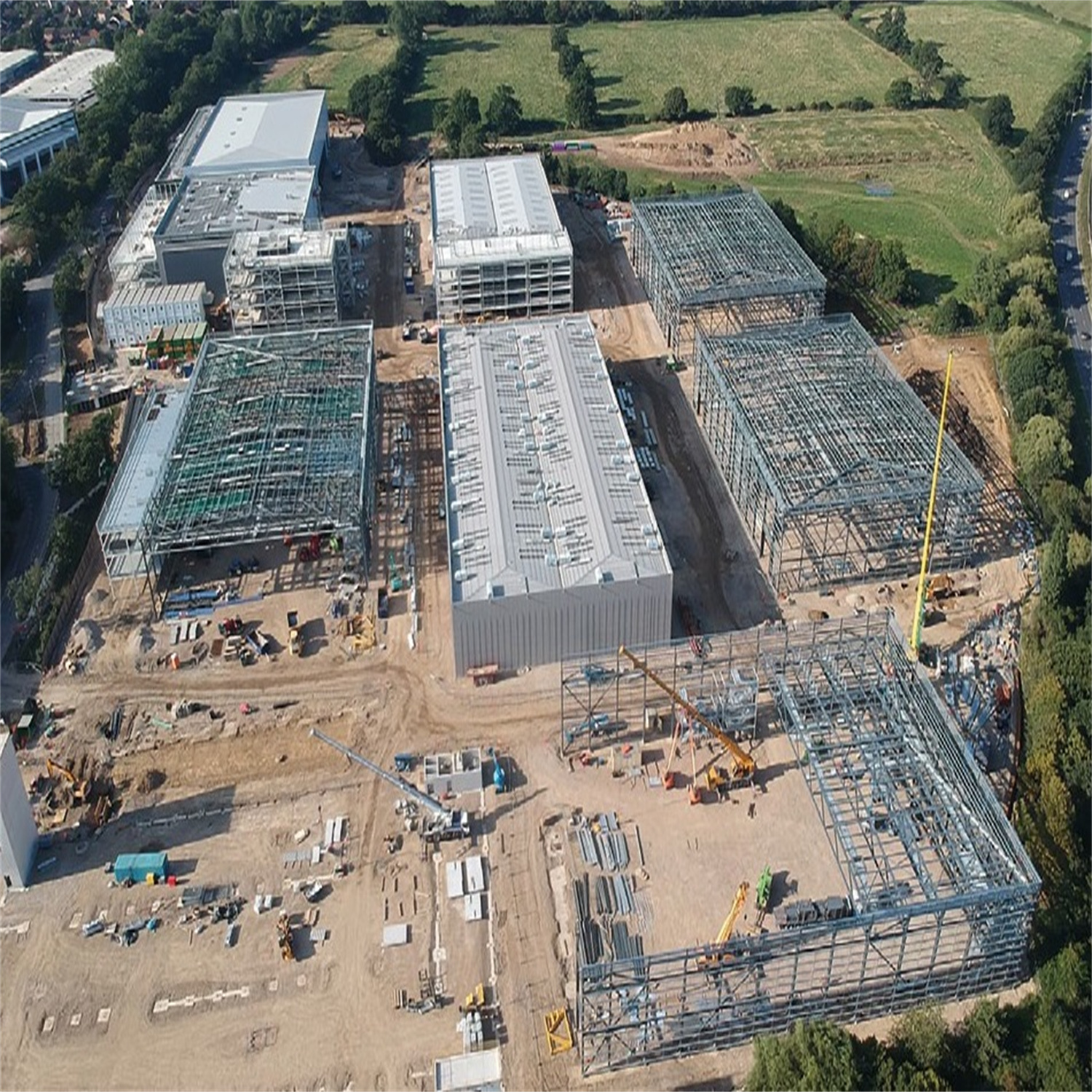
Truss-Based Load Distribution Enables Long, Column-Free Spans
Even Load Transfer Through Spatial Truss Networks
In a space Truss roof, loads enter the structure and travel through multiple paths. This redundancy ensures balanced force transfer and prevents any single member from carrying excessive stress. For long spans, even load transfer limits localized deformation and supports large roof areas without intermediate supports. Designers benefit from greater confidence when planning open interiors that demand both strength and flexibility.
Eliminating Internal Columns While Maintaining Roof Stability
Column-free interiors are a primary goal in wide-span building design. Space Truss roofs achieve this by providing stiffness through depth and geometry rather than vertical supports. The Truss system replaces the structural role of columns, allowing interior layouts to remain flexible over time. Seating arrangements, exhibition zones, or industrial workflows can change without requiring structural modification.
Consistent Structural Balance Over Extra-Large Spans
For extra-large roof spans, structural balance directly affects long-term performance and serviceability. Space Truss systems maintain balance by using symmetrical layouts and repetitive modules that distribute stiffness uniformly in all directions. This configuration limits differential deflection and controls internal force redistribution under variable loading. Balanced Truss behavior also improves resistance to wind-induced oscillation and temperature-related movement, helping the roof maintain geometric stability and predictable performance throughout its service life.
High Strength-to-Weight Ratio: A Core Advantage of Truss Systems
Lightweight Truss Members Reducing Overall Structural Mass
In space Truss roof systems, lightweight members play a critical role in achieving large spans without excessive structural weight. By using tubular or hollow steel sections optimized for axial forces, designers reduce dead load, ease construction logistics, and improve overall structural efficiency in wide-span projects.
| Aspect | Detailed Content | Typical Data / Parameters | Practical Application | Key Considerations |
| Member geometry | Circular hollow sections (CHS), square/rectangular tubes | CHS diameter commonly 60–180 mm | Efficient axial force resistance in Truss systems | Section selection must align with force paths |
| Section thickness | Optimized wall thickness | 3–12 mm depending on span and load | Balances strength and weight | Over-thick sections reduce efficiency |
| Material density | Structural steel | ~7,850 kg/m³ | Predictable self-weight calculations | Influences foundation and lifting design |
| Structural behavior | Axial tension and compression | Bending ratio typically <10% of total stress | Maximizes material utilization | Requires accurate Truss geometry |
| Weight reduction | Compared with solid beams | 20–35% lower self-weight (project-dependent) | Reduces overall roof dead load | Must be verified by structural analysis |
| Foundation impact | Reduced vertical load | Foundation load reduction often 10–25% | Enables smaller footings or piles | Soil conditions still govern design |
| Transportation efficiency | Modular lightweight members | Typical truck load 15–25 t per shipment | Simplifies logistics planning | Length limits vary by region |
| Lifting requirements | Crane capacity reduction | Crane tonnage often reduced by 20–30% | Improves site safety and cost control | Lift plans must consider wind effects |
| Construction speed | Easier handling on site | Faster positioning per module | Supports tighter schedules | Requires clear assembly sequencing |
| Typical use cases | Stadiums, airports, exhibition halls | Roof spans commonly 40–80 m | Ideal for large, open interiors | Coordination with services is essential |
Tip:Early evaluation of Truss member size and wall thickness helps balance weight reduction with stiffness requirements, ensuring logistics and foundation benefits are realized without compromising structural performance.
Lower Foundation Demands Enabled by Space Truss Roof Design
Because space Truss roofs weigh less than conventional roof systems, they place lower loads on foundations. This advantage supports more economical foundation design, especially in wide-span buildings where substructure costs can be significant. Reduced roof weight lowers pile sizes, concrete volumes, and construction complexity while improving adaptability to varied soil conditions.
Material Efficiency Compared with Conventional Roof Structures
Space Truss roofs achieve large spans by distributing forces through three-dimensional geometry rather than relying on mass. Compared with beam-and-slab systems, Truss structures place material only where it contributes structurally, minimizing waste. This efficiency lowers embodied material quantities while maintaining stiffness and strength. From an engineering standpoint, material-efficient Truss systems simplify structural analysis and enable standardized design across projects, supporting consistent quality and long-term cost control.
Architectural Freedom Enabled by Space Truss Roof Systems
Truss Configurations Supporting Flat, Curved, and Domed Roofs
Space Truss systems can be engineered into flat grids, barrel vaults, or domes by adjusting member orientation and node geometry. Flat Truss roofs prioritize structural efficiency and ease of installation, making them suitable for industrial and logistics buildings. Curved and domed Truss forms introduce arch action, which improves load distribution and reduces bending effects over long spans. Despite the visual differences, all configurations rely on axial force transfer, allowing engineers to apply consistent design principles while architects gain freedom to shape large, expressive roof forms.
Adapting Truss Geometry to Complex and Irregular Building Plans
Complex building plans often include irregular boundaries, large openings, and varying roof elevations. Space Truss geometry accommodates these conditions by modifying module size, depth, and grid orientation without disrupting global load paths. This adaptability allows Truss roofs to align with atriums, skylights, and façade transitions. Engineers can locally reinforce areas with higher loads while maintaining overall system continuity. As a result, Truss roofs integrate smoothly with mechanical, electrical, and architectural systems in buildings with nonstandard layouts.
Integrating Structural Performance with Visual Impact
Exposed Truss structures allow the roof system to function as both load-bearing framework and architectural expression. The visible geometry communicates how forces flow through the building, reinforcing a sense of technical honesty. Regular spacing and repetition create visual rhythm, while variations in depth or curvature add spatial interest. From an engineering perspective, exposing the Truss also simplifies inspection and maintenance. This integration ensures that performance requirements and aesthetic goals reinforce each other rather than competing within the design.
Construction Efficiency and Precision of Modern Truss Roof Systems
Prefabricated Truss Components Accelerating Project Schedules
In wide-span buildings, space Truss roof systems commonly rely on factory-prefabricated components. By shifting precision fabrication, node manufacturing, and quality control to controlled environments, on-site work focuses mainly on assembly and lifting. This approach improves schedule predictability, reduces construction risk, and supports tighter cost control across large projects.
| Aspect | Detailed Content | Typical Data / Parameters | Practical Application | Key Considerations |
| Truss components | Top chords, bottom chords, web members, nodes | Steel tube diameter typically Φ60–Φ180 mm | Forms a complete three-dimensional Truss load system | Component numbering must match erection drawings |
| Material grade | Structural steel (e.g., Q235B, Q355) | Yield strength ≥235 MPa / ≥355 MPa | Supports axial tension and compression in long spans | Material certificates and re-testing required |
| Fabrication accuracy | Member length tolerance | ±1.0–2.0 mm | Enables fast alignment during site assembly | Excess tolerance affects global geometry |
| Node processing | Bolted ball or welded nodes | Bolt grades commonly 8.8S or 10.9S | Improves joint capacity and assembly speed | Threads must be protected during transport |
| Surface protection | Anti-corrosion coating or hot-dip galvanizing | Zinc layer thickness ≥80 μm | Extends roof service life | Avoid damage during handling |
| Production environment | Factory-controlled fabrication | CNC cutting, CNC drilling | Stable quality and reduced human error | Requires certified quality system |
| Site installation | Lifting and bolted connections | Single module installation ~20–40 min | Accelerates on-site construction | Lifting sequence should be simulated |
| Schedule impact | Construction time reduction | Overall schedule shortened by ~20–30% | Improves delivery certainty | Depends on early-stage detailing |
| Cost control | Reduced labor and rework | On-site labor reduced by ~15–25% | Lowers total construction cost | Design effort cannot be minimized |
| Typical applications | Stadiums, exhibition halls, airports | Single-span roofs commonly 40–80 m | Suitable for large roof areas | Must meet transport constraints |
Tip:Defining the prefabrication level and node type early in the project helps align design, manufacturing, and erection strategies, reducing schedule uncertainty and preventing cost overruns later in construction.
Factory-Controlled Accuracy of Truss Members and Nodes
Factory-controlled fabrication allows Truss members and nodes to be produced under stable conditions using CNC cutting, drilling, and welding processes. This precision ensures that geometric tolerances remain consistent across the entire roof system, which is essential for three-dimensional load transfer. Accurate nodes improve force continuity between members and reduce unintended secondary stresses. For large-span roofs, consistent accuracy also simplifies structural inspection and alignment control during installation, supporting long-term reliability.
Streamlined On-Site Assembly for Large-Scale Roof Structures
Space Truss roofs are assembled on site using predefined erection sequences based on structural logic and load paths. Modular sections are lifted and connected in stages, maintaining stability throughout construction. This method limits temporary supports and reduces interference between trades. Clear assembly sequencing also improves safety management and allows work to proceed in parallel with other building activities, which is critical for maintaining progress on large, complex projects.
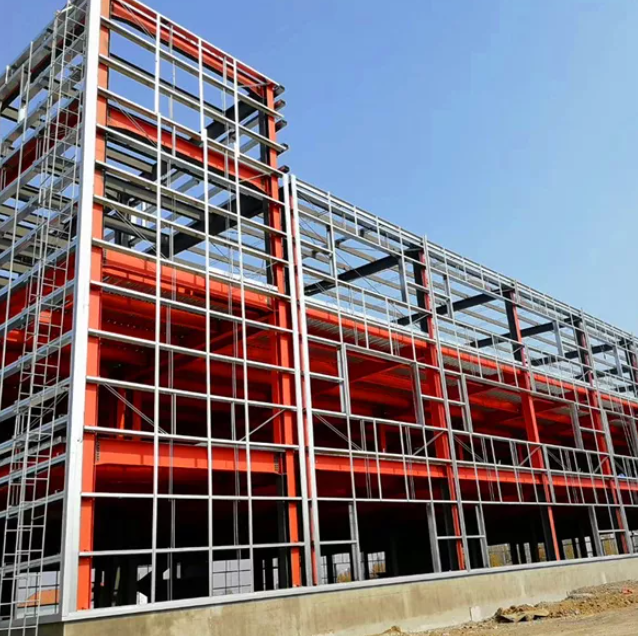
Why Truss Roof Systems Are Widely Used in Wide-Span Buildings
Stadiums and Arenas Requiring Clear Sightlines and Open Space
In stadium and arena design, roof structures must span large seating bowls without interrupting sightlines. Space Truss roofs achieve this by transferring loads through three-dimensional axial members rather than vertical supports. The inherent stiffness of the Truss system controls vibration caused by crowd movement and dynamic wind effects. It also provides stable mounting zones for lighting rigs, scoreboards, and acoustic systems. This structural clarity supports both spectator comfort and broadcast-quality performance environments.
Airports and Transportation Hubs Demanding Large Roof Coverage
Airport terminals and transportation hubs require expansive roofs that cover concourses, waiting areas, and circulation zones. Space Truss systems distribute roof loads efficiently across long spans while allowing integration of skylights and façade glazing. Their modular configuration supports phased expansion without disrupting existing operations. The Truss framework also creates clear zones for mechanical systems, signage, and maintenance access, which is essential in high-traffic public infrastructure.
Industrial and Exhibition Buildings Benefiting from Truss Flexibility
Industrial facilities and exhibition halls demand roof systems that support heavy loads while preserving adaptable interior space. Space Truss roofs accommodate overhead cranes, suspended utilities, and large lighting arrays through predictable axial load paths. Their modular geometry allows spans to adjust as production lines or exhibition layouts change. This flexibility improves long-term operational efficiency and reduces the need for structural modification when building functions evolve.
Conclusion
Space Truss roof systems are ideal for wide-span buildings because they combine efficient load transfer, lightweight construction, and strong architectural flexibility. Their three-dimensional geometry supports large, column-free interiors while maintaining stability and construction efficiency. Through prefabrication and precise assembly, Truss roofs also help control schedules and costs. With proven expertise in space Truss engineering and fabrication, Qingdao qianchengxin Construction Technology Co., Ltd. provides reliable roof solutions that enhance performance, adaptability, and long-term value for large-scale projects.
FAQ
Q: What is a Space Truss roof system?
A: A Space Truss roof uses three-dimensional Truss geometry to span large areas without internal columns.
Q: Why are Truss roof systems ideal for wide-span buildings?
A: Truss systems distribute loads efficiently, enabling long spans, structural stability, and open interior spaces.
Q: How does a Space Truss reduce structural weight?
A: A Truss roof relies on axial forces, allowing lightweight members to achieve high strength.
Q: Are Truss roof systems cost-effective for large projects?
A: Yes, Truss prefabrication shortens schedules and lowers foundation and labor costs.
Q: Where are Space Truss roofs commonly used?
A: Truss roofs are widely used in stadiums, airports, exhibition halls, and industrial buildings.


